7 Open vs Closed Clippers: Which Is Better for Your Haircut?
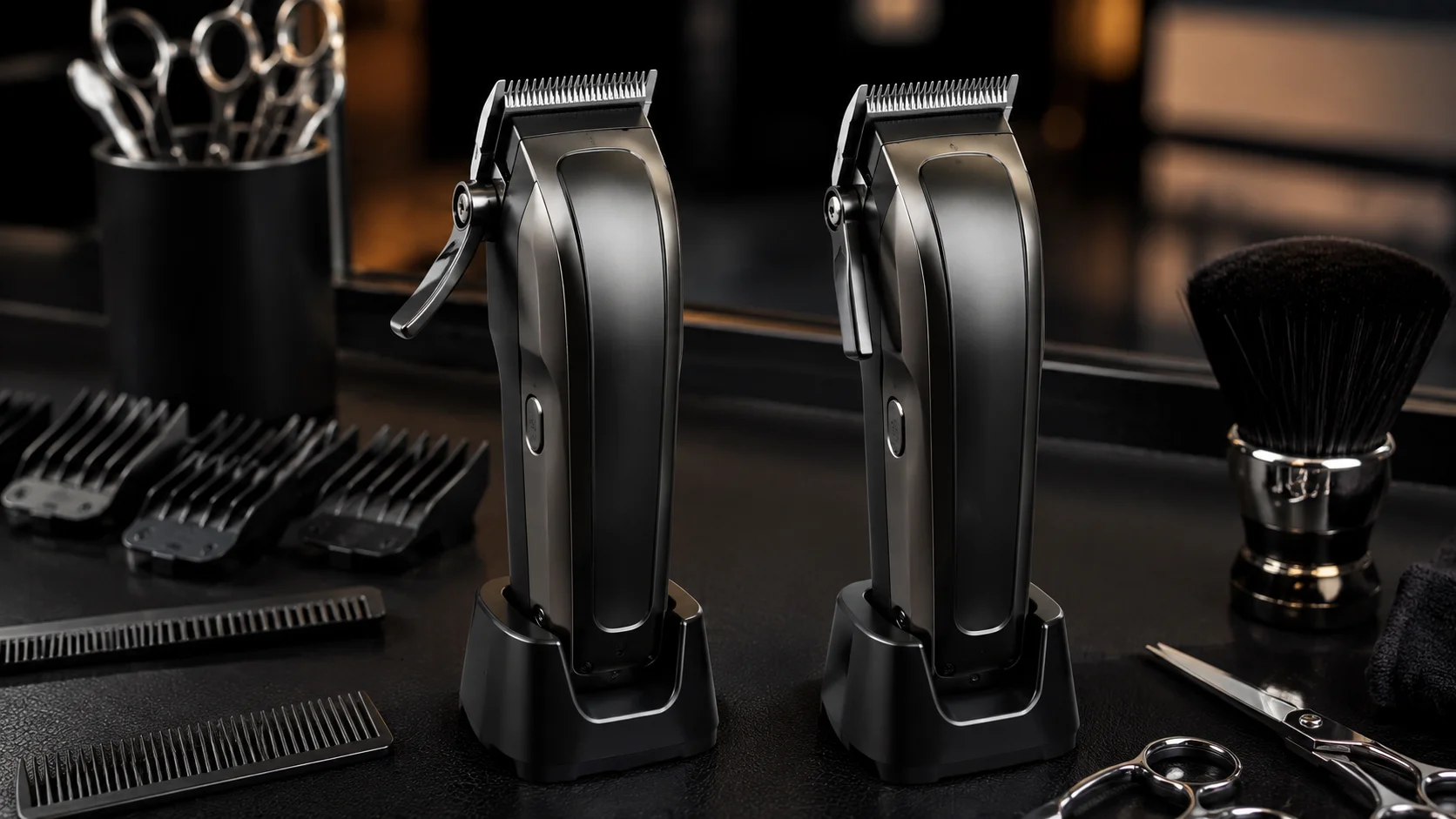


If you’ve recently started cutting hair or have been watching barber tutorials online, you’ve probably heard the terms open clippers and closed clippers. At first, they can seem confusing because the difference appears very small. In reality, that tiny adjustment is one of the biggest reasons professional barbers create smooth, flawless fades.
The small lever on the side of adjustable clippers changes the blade position, allowing you to cut slightly more or less hair without changing guards. Mastering this simple feature gives you better control, smoother blends, and cleaner haircuts.
In this guide, you’ll learn exactly how open and closed clippers work, their differences, and when each setting should be used.
What Are Open and Closed Clippers?


Open and closed clippers refer to the position of the adjustable blade lever found on most professional hair clippers.
When the lever is pushed all the way up, the clipper is considered closed. In this position, the moving blade sits closest to the stationary blade, producing the shortest possible cut for that guard.
When the lever is pulled downward, the blade opens slightly. This creates a slightly longer cutting length because less hair is removed during each pass.
Although the change is only a fraction of a millimeter, it creates enough variation to blend haircut lines smoothly.
Quick Comparison
| Feature | Open Clippers | Closed Clippers |
|---|---|---|
| Hair Length | Slightly Longer | Shorter |
| Blade Position | Blade Pulled Back | Blade Fully Forward |
| Best Use | Blending & Fading | Sharp Finishing |
| Fade Control | Excellent | Excellent for Final Details |
| Beginner Friendly | Yes | Requires More Control |
1. Closed Clippers Cut Hair Shorter


A closed clipper creates the shortest cut possible for the selected guard. Since the blades sit closer together, they remove more hair with every stroke.
Barbers commonly use the closed position when creating the initial guideline for a fade, cleaning up around the ears, shortening bulky areas, or making the haircut appear sharper. Because it cuts aggressively, beginners should work slowly to avoid taking off too much hair.
2. Open Clippers Leave More Hair Behind


Opening the clipper lever increases the cutting length slightly. Instead of cutting hair extremely short, it leaves a little more length behind, making transitions softer.
This extra length is especially useful when removing visible fade lines. Rather than creating harsh steps between guard sizes, the open position helps blend everything together naturally.
Most barbers spend more time fading with the lever open than beginners realize.
3. Open Clippers Make Fading Easier


A clean fade depends on gradual transitions. Simply changing guards isn’t enough.
Professional barbers constantly move the lever between closed, half-open, and fully open positions while using the same guard. These tiny adjustments create additional cutting lengths that eliminate visible lines.
For example, a #1 guard actually provides several cutting lengths depending on whether the lever is closed, halfway open, or fully open.
4. Closed Clippers Help Create Crisp Finishes
Once most of the blending is complete, the closed position becomes useful again.
Barbers often close the lever to tighten the lower part of a fade, clean around the neckline, sharpen the sideburns, and remove any remaining uneven spots. Since the blade cuts shorter, it creates a more polished appearance.
The key is making light, controlled strokes instead of pressing the clipper into the scalp.
5. Every Guard Has Multiple Cutting Lengths
Many people believe each guard cuts only one specific length, but adjustable clippers work differently.
A single guard provides several cutting lengths depending on the lever position.
| Guard | Closed | Half Open | Fully Open |
|---|---|---|---|
| #1 | Shortest | Medium | Longest |
| #2 | Shortest | Medium | Longest |
| #3 | Shortest | Medium | Longest |
This flexibility allows barbers to perform detailed blending without constantly switching guards.
6. Beginners Should Start with the Lever Open
If you’re cutting your own hair or learning barbering, the open position is usually the safest starting point.
Since it removes less hair, mistakes are easier to fix. You can always close the lever gradually if the hair needs to be shorter.
Many beginner haircut accidents happen because the lever is closed before the user realizes how much hair will be removed.
7. Professional Barbers Rarely Leave the Lever in One Position


Watch an experienced barber closely, and you’ll notice they constantly move the lever throughout the haircut.
Instead of thinking of open and closed as separate cutting methods, think of them as two settings that work together. The lever is adjusted continuously while fading, blending, detailing, and finishing.
Learning this habit is one of the biggest steps toward producing professional-quality haircuts.
When Should You Use Open Clippers?
Open clippers are best when you’re blending different hair lengths, softening fade lines, starting a fade, learning clipper control, or working carefully to avoid removing too much hair.
When Should You Use Closed Clippers?
Closed clippers are ideal for creating shorter cuts, cleaning around the ears and neckline, sharpening sideburns, finishing fades, and removing stubborn dark lines.
Common Mistakes to Avoid
One of the most common mistakes beginners make is leaving the lever in one position for the entire haircut. Another frequent error is pressing too hard, which removes more hair than expected. Skipping the half-open position also makes fades look harsh because there isn’t a smooth transition between cutting lengths.
Practicing lever control is just as important as learning different guard sizes.
Frequently Asked Questions
Are open clippers better than closed clippers?
Neither is better. Open clippers are mainly used for blending, while closed clippers create shorter cuts and cleaner finishes. Professional barbers use both throughout almost every haircut.
Does opening the lever cut more hair?
No. Opening the lever actually leaves more hair behind because the blades are farther apart.
Which setting should beginners use?
Most beginners should begin with the lever open because it’s more forgiving and offers greater control.
Can you fade hair without using the lever?
Yes, but the fade usually won’t be as smooth. Lever adjustments provide extra cutting lengths that make blending much easier.
Do all clippers have an adjustable lever?
No. Only adjustable clippers include an open and closed lever. Fixed-blade clippers rely entirely on guard attachments.
Final Thoughts
Understanding the difference between open vs closed clippers can instantly improve your haircut results. While the adjustment seems minor, it gives you precise control over cutting length and allows you to create cleaner fades, smoother blends, and more professional-looking haircuts.
Whether you’re a beginner practicing at home or an aspiring barber, learning when to open and close the clipper lever is a skill that will make every haircut look more polished.

Henry Collins
- I research many different shavers, trimmers, and other grooming products.
- Share ideas on which product is best for which skin type or hair type.
- Help you pick the right grooming product and save your time and money.

The Conversation
Your voice matters. Discussions are moderated for civility.