HeadBlade MOTO Review: Is This the Best Head Shaver in 2026?
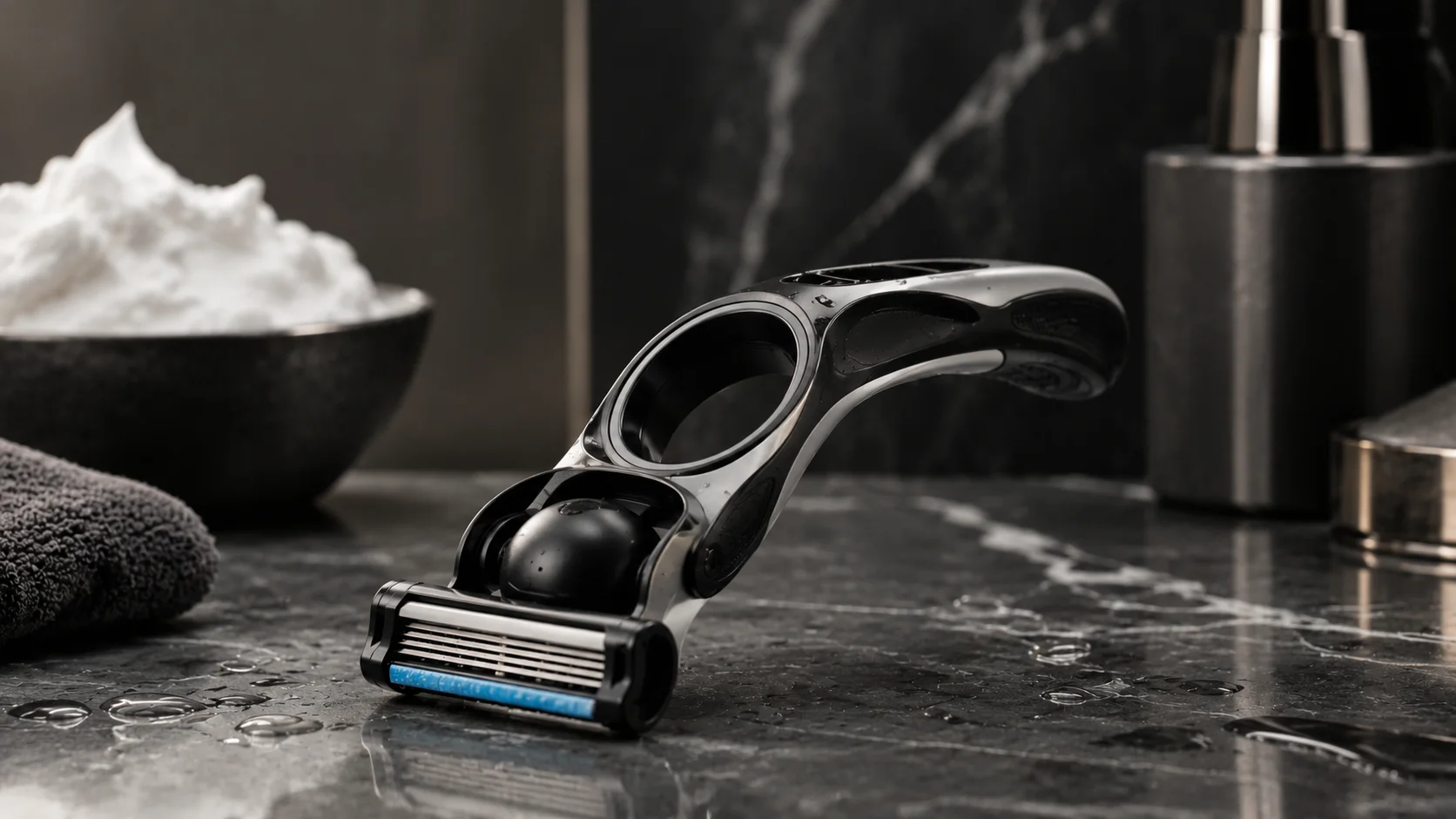


If you shave your head regularly and want a genuinely smooth, blade-close finish, the HeadBlade MOTO is one of the most interesting manual head razors you can buy in 2026. Unlike a traditional razor with a long handle, the MOTO uses a finger-ring design, a rolling ball, and a unique suspension system that allows the blade to follow the contours of your scalp.
HeadBlade currently recommends the MOTO as its preferred model for people who are new to the HeadBlade system. The company lists the standard MOTO at $13.99, and it supports both HB4 and HB6 blade cartridges.
But does the unusual design actually make head shaving easier? After looking at its design, shaving performance, comfort, blade compatibility, maintenance, and limitations, here’s our full HeadBlade MOTO review for 2026.
HeadBlade MOTO Quick Overview
| Feature | HeadBlade MOTO |
|---|---|
| Type | Manual head razor |
| Designed for | Head, face & body |
| Standard blade | HB4 |
| Compatible blades | HB4 & HB6 |
| Blade count | 4 with HB4 |
| Suspension | Dual-active suspension |
| Head movement | Up/down pivot + side-to-side lean |
| Grip | Finger-ring / ergonomic body |
| Rolling system | Free-moving ball |
| Weight | Lightweight |
| Current listed price | $13.99 |
| Best for | Close bald-head shaving |
The MOTO is designed specifically around head shaving, although HeadBlade says it can also be used on the face, body and legs. Its free-rolling ball helps it move around curved and difficult areas such as the ears and back of the neck.
What Is the HeadBlade MOTO?
The MOTO is the fourth-generation HeadBlade razor and was developed as a successor to the ATX. The company introduced the MOTO with a major focus on improving the ATX’s limitations around the ears and nape of the neck.
The difference is the suspension system.
The ATX uses wheels and a rigid body, while the MOTO uses a dual-active suspension design. The blade can pivot up and down to follow the scalp, while the body can lean from side to side. HeadBlade compares the movement to a motorcycle leaning through a turn.
That sounds complicated, but the practical idea is simple: the razor is designed to move with your head rather than forcing you to keep the blade at exactly the same angle.
Design and Build Quality
The MOTO has a compact, unusual design that looks more like a small mechanical device than a conventional razor.
Your middle finger goes through the ring, while your palm and fingers remain close to the scalp. This gives you direct tactile feedback while shaving, which can be particularly useful when you’re working on the back of your head and can’t see the blade.
HeadBlade says the ergonomic body is designed to provide nonslip control, even when wet. The free-moving ball at the front also helps the razor travel around difficult areas.
The design has received major recognition as well. HeadBlade lists the MOTO as a Red Dot Design Award winner from 2017 and an A’Design Award winner from 2018.
How Does the MOTO Work?
The shaving technique is different from using a normal razor.
First, place your middle finger through the ring and make sure the ball is facing forward. Apply shaving cream or gel, place the ball against your scalp, and then pull the razor from the back of your head toward the front.
HeadBlade recommends testing the suspension and pivoting head before starting so you can get a feel for the pressure and angle.
The important thing is not to force the razor. The suspension is designed to help the blade follow the scalp, so excessive pressure defeats part of the design.
Shaving Performance
The MOTO’s biggest strength is how close it can shave.
Unlike an electric head shaver, the MOTO uses a conventional blade cartridge. That means you can get the smooth, skin-level result associated with wet shaving rather than the tiny amount of remaining stubble that many electric shavers leave behind.
The standard MOTO works with HB4 four-blade cartridges, while the razor is also compatible with HB6 cartridges.
HeadBlade specifically markets the MOTO as providing a very close shave without tugging and pulling. Its suspension and rolling ball are intended to help the blade maintain contact with the curved surface of your scalp.
For someone who shaves their head several times a week, this can be a major advantage.
Does It Work Around the Ears?
This is one area where the MOTO has a meaningful advantage over the ATX.
HeadBlade developed the MOTO partly because the ATX’s wheels and rigid body could make certain areas around the ears and nape more difficult. The MOTO’s narrow body and free-moving ball allow it to move closer around these areas while the blade pivots independently.
The result is a more flexible shaving experience.
You still need to slow down around the ears and neckline, but the MOTO’s design makes those awkward areas easier to approach than with a rigid razor.
Comfort and Skin Irritation
The MOTO can be very comfortable, but technique matters.
Because you’re using an actual blade against your scalp, irritation and small cuts are still possible if you use excessive pressure or repeatedly pass over the same area.
HeadBlade recommends using shaving cream for the closest shave and instructs users to apply comfortable pressure while allowing the blade to contour to the head.
The MOTO’s main comfort advantage comes from its suspension rather than from eliminating blade contact. If you have sensitive skin, take shorter strokes and avoid trying to remove every tiny remaining patch with repeated passes.
HeadBlade MOTO Pros and Cons
| Pros | Cons |
| Extremely close manual shave | Requires shaving cream or gel for best results |
| Dual-active suspension | Learning the correct pressure takes practice |
| Blade pivots up and down | Cuts are still possible with poor technique |
| Body leans side to side | Replacement blades add ongoing cost |
| Free-rolling ball works around ears | Not as convenient as an electric shaver |
| Comfortable ergonomic grip | Requires more care than a simple disposable razor |
| HB4 and HB6 compatibility | Manual shaving takes some time |
| Lightweight and compact | Blade cartridges are proprietary |
| Can also shave face and body | Not ideal if you dislike wet shaving |
MOTO vs ATX
If you’re deciding between the HeadBlade MOTO and ATX, the MOTO is the more advanced option.
The ATX uses wheels and a rigid body. The MOTO replaces that arrangement with a free-moving ball and dual-active suspension. HeadBlade says the MOTO was designed to address the ATX’s limitations, particularly around the ears and nape of the neck.
| Feature | MOTO | ATX |
| Guiding system | Free-moving ball | Wheels |
| Blade movement | Up/down pivot | More limited |
| Body movement | Side-to-side lean | Rigid |
| Around ears | Better | Good |
| Nape of neck | Better | More challenging |
| HB4 compatible | Yes | Yes |
| HB6 compatible | Yes | Yes |
| Best choice | Maximum flexibility | Simpler design |
For a small difference in price, we’d choose the MOTO for most new HeadBlade users.
Blade Compatibility
The MOTO works with both HB4 and HB6 cartridges. The standard product listing describes the HB4 as the compatible four-blade option, while HB6 cartridges provide an alternative for users who prefer the six-blade setup.
This gives you some flexibility when deciding how aggressive or efficient you want your shaving setup to be.
One thing to remember is that cartridge costs become more important over time than the price of the razor itself. If you shave your head frequently, factor replacement blade costs into your long-term budget.
Cleaning and Maintenance
Cleaning the MOTO is relatively straightforward.
HeadBlade includes side vents around the ball area to make rinsing easier and reduce buildup. The company specifically designed the vents so the ball can be rinsed without creating a mess.
After shaving, rinse the razor thoroughly and allow it to dry. Keep the blade cartridge clean and replace it when it becomes dull or starts pulling instead of cutting smoothly.
Is the HeadBlade MOTO Good for Beginners?
Surprisingly, yes.
HeadBlade currently recommends the MOTO for people who are new to HeadBlade. The company says its design provides fingertip control while the articulating mechanism follows the scalp’s contours.
That doesn’t mean you’ll master it in one shave.
The first few sessions should be treated as practice. Start with gentle pressure and relatively slow strokes until you understand how the suspension responds to your head.
Once the technique becomes familiar, the MOTO can become much faster than using a conventional razor.
How Much Does the HeadBlade MOTO Cost?
At the time of our 2026 review, HeadBlade’s official product page lists the standard MOTO at $13.99.
HeadBlade also offers a starter kit that includes the MOTO, an HB4 refill pack and a 5-ounce bottle of HeadSlick shaving cream. The current official starter-kit listing shows $32.99.
Prices can change, and regional retailers may have different pricing, so it’s worth checking the exact package before buying.
Who Should Buy the HeadBlade MOTO?
The MOTO makes the most sense if you:
- Shave your head completely bald
- Want a blade-close finish
- Find conventional razors awkward on the back of your head
- Want better contouring around the ears
- Prefer manual shaving to electric head shavers
- Want a compact travel-friendly razor
- Don’t mind using shaving cream
- Want to spend relatively little on the razor itself
You may want to choose an electric head shaver instead if speed and convenience are more important than getting the absolute closest possible result.
Final Verdict
The HeadBlade MOTO is one of the best specialized manual head razors available in 2026.
Its biggest advantage is the combination of the finger-controlled design, free-moving ball and dual-active suspension. Those features allow the razor to follow the contours of the scalp while making difficult areas around the ears and neck easier to reach.
It’s not completely foolproof. You still need to learn the correct pressure and shaving direction, and because it uses real blades, careless technique can lead to nicks or irritation.
But once you get comfortable with it, the MOTO can deliver an exceptionally close, smooth head shave without the bulky feel of a conventional razor.
Overall rating: 4.7/5
Best for: Men who want a close, smooth bald-head shave and prefer a manual razor.
Bottom line: If you’re choosing between the MOTO and ATX in 2026, we’d pick the MOTO. Its improved articulation and ball-based suspension make it more versatile, particularly around the ears and back of the neck, while its $13.99 listed price keeps the entry cost surprisingly low.

Henry Collins
- I research many different shavers, trimmers, and other grooming products.
- Share ideas on which product is best for which skin type or hair type.
- Help you pick the right grooming product and save your time and money.

The Conversation
Your voice matters. Discussions are moderated for civility.