Shavette Razor Review 2026: Is It Better Than a Safety Razor?
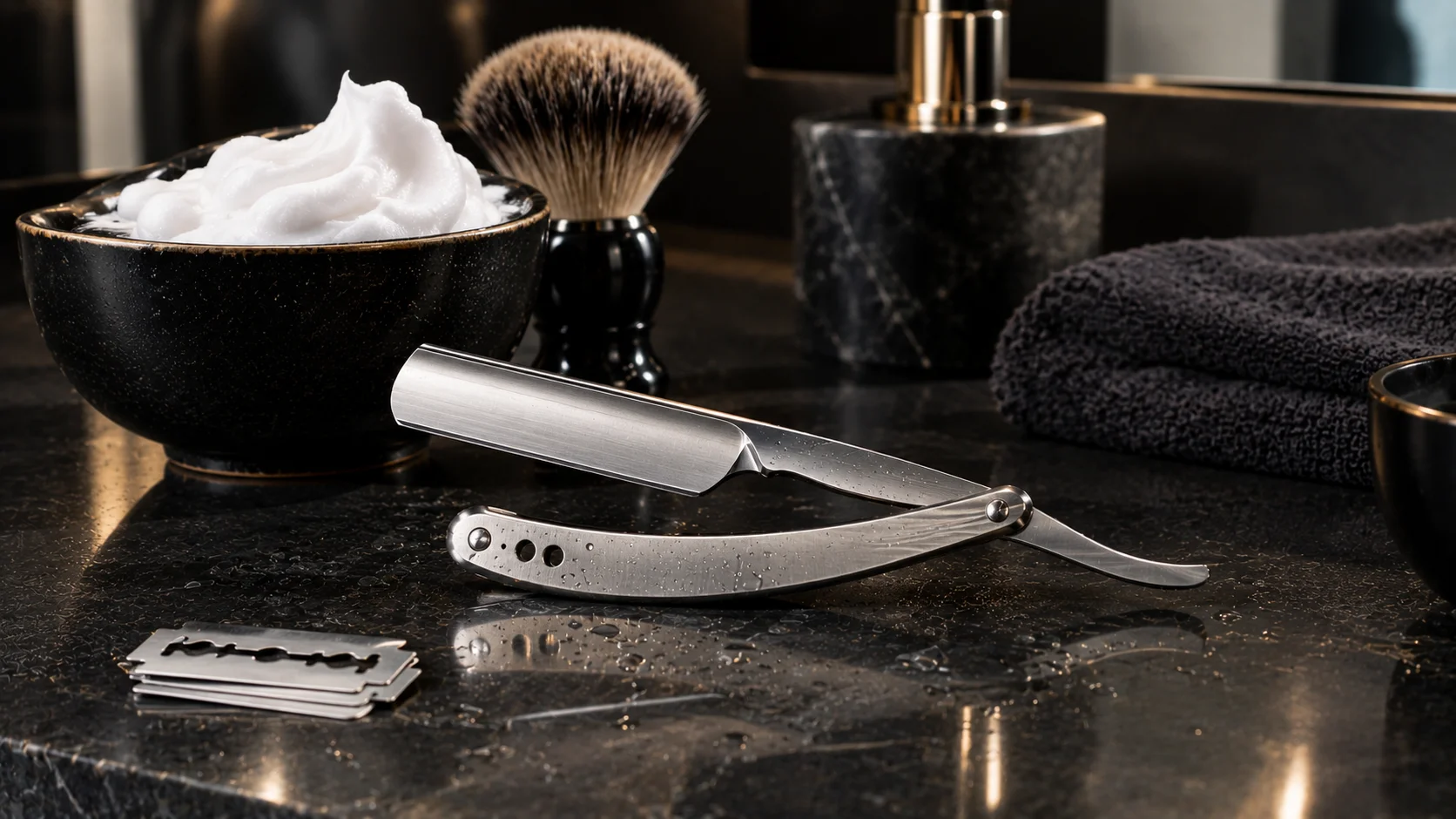


If you want a very close shave with the control of a traditional straight razor, a shavette is worth considering. It looks similar to a classic straight razor, but instead of using a permanent blade that needs sharpening and stropping, it uses a replaceable blade.
Shavettes are popular with traditional wet shavers and professional barbers because they give excellent control around the beard line, sideburns, cheeks and neck. They are also easier to maintain than a traditional straight razor because there is no need to hone or sharpen the blade.
In 2026, there are many shavette styles available, from inexpensive half-DE models to premium systems such as the Feather Artist Club range. So, is a shavette a good choice for everyday shaving? Let’s find out.
What Is a Shavette?
A shavette is essentially a straight-razor-style shaving tool with a replaceable blade. Unlike a traditional straight razor, you do not permanently maintain the same blade.
Depending on the model, a shavette may accept a half of a standard double-edge razor blade, a single-edge blade, or a proprietary blade system.
For example, Parker makes shavettes that can use standard DE blades snapped in half, while Feather’s Artist Club razors use their own compatible professional blades.


This replaceable-blade design is the biggest difference between a shavette and a traditional straight razor.
Shavette vs Straight Razor
At first glance, both razors look almost identical. The shaving technique is also similar because you are controlling an exposed blade directly against the skin.
The main difference is maintenance.
| Feature | Shavette | Traditional Straight Razor |
|---|---|---|
| Blade | Replaceable | Permanent |
| Sharpening | Not required | Required |
| Stropping | Usually not required | Required |
| Blade cost | Ongoing | Low after purchase |
| Maintenance | Easy | More demanding |
| Learning curve | Moderate | Moderate to high |
| Hygiene | Easy blade replacement | Requires careful cleaning |
| Best for | Precision and convenience | Traditional shaving enthusiasts |
A shavette gives you much of the traditional straight-razor experience without having to sharpen the blade. Feather, for example, specifically designs its professional razors around replaceable blades.
Shaving Performance
The biggest reason to buy a shavette is closeness and precision.
Because there is no large cartridge head covering the blade, you can clearly control the angle and movement of the razor. This makes it especially useful for cleaning up beard edges and shaving areas where precision matters.


A good shavette can produce an extremely close shave, but the result depends heavily on technique. Unlike a cartridge razor, you cannot simply apply heavy pressure and move quickly across the face.
A light touch and controlled strokes are important.
Feather’s Artist Club range, for example, is specifically designed for professional barber use and offers different razor designs with different levels of blade exposure and tip shapes.
Is a Shavette Good for Beginners?
Yes, but it requires patience.
If you have never used an open-blade razor before, a shavette can feel intimidating at first. You are holding a blade directly against your skin, so rushing the process is not a good idea.
Start with short strokes and very light pressure. It is also better to learn on easier areas such as the cheeks before attempting difficult areas around the chin and neck.


Some shavettes are more beginner-friendly than others. Feather’s Artist Club SS, for example, uses a rounded tip and is designed around a softer shaving feel, while other models provide more blade exposure and are better suited to experienced users.
Blade Options
One of the most important things to check before buying a shavette is which blade system it uses.
Some models accept half of a standard DE blade. Parker’s SRDW, for example, allows users to snap a double-edge blade in half and insert it into the razor.
Other shavettes use longer proprietary blades.
Feather Artist Club razors use Feather Professional blades. The company specifically recommends its Professional blade series for its Artist Club razors.


This means you should always check blade compatibility before buying replacement blades.
Feather Artist Club Shavettes
The Feather Artist Club range is one of the premium options in this category.
The range includes models such as the Artist Club SS, SR and DX. They have different designs and shaving characteristics.
The newer Artist Club SR weighs around 51 grams, uses a stainless-steel body and has a one-touch blade-holding mechanism. Feather describes the SR as being designed for professional use and thick beards.


The Artist Club SS is positioned as the smoother and milder option, with a rounded tip designed to reduce pressure on the skin. The DX is more focused on a traditional straight-razor feel and professional use.
How to Use a Shavette
Using a shavette correctly is more important than the brand you choose.
1. Prepare Your Skin
Wash your face with warm water and use a good shaving soap, cream or gel.
The goal is to soften the beard and provide enough lubrication for the blade.
2. Hold the Razor Lightly
Do not grip the handle too tightly.
A relaxed grip gives you better control and helps prevent excessive pressure.
3. Use Short Strokes
Start with short, controlled strokes.
Do not try to shave a large area with one long movement.
4. Let the Blade Do the Work
You should not need to push hard against your skin.
If the blade is sharp and your lather is good, light pressure should be enough.
5. Take Extra Care Around the Neck
The neck is usually one of the more difficult areas because the skin is less flat and hair can grow in different directions.
Take your time rather than trying to finish quickly.
Cleaning and Maintenance
One of the biggest advantages of a shavette is simple maintenance.
After shaving, remove the disposable blade according to the razor manufacturer’s instructions, rinse the razor and dry it properly.
Because the blade is replaceable, you don’t have to sharpen or hone it.
Some professional Feather models are designed so the razor can be disinfected by boiling or with ethanol, according to Feather’s instructions.
Never assume every shavette can be disinfected in the same way. Always follow the instructions for your specific model.
Shavette Pros and Cons
| Pros | Cons |
|---|---|
| Very close shave | Steeper learning curve than cartridge razors |
| Excellent precision | Easy to nick skin with poor technique |
| Replaceable blades | Blades need regular replacement |
| No sharpening required | Requires more attention while shaving |
| Great for beard edging | Not ideal for people who want a quick shave |
| Low long-term maintenance | Blade compatibility varies by model |
| Professional barber-style control | Premium models can be expensive |
| Easy to clean | Can irritate skin if used with too much pressure |
Is a Shavette Better Than a Safety Razor?
Not necessarily. They are designed for different shaving experiences.
A safety razor gives you a protective razor head around the blade. This makes it easier for beginners to control the shaving angle.
A shavette exposes more of the blade and gives you more direct control.


If you enjoy traditional shaving and want maximum precision, a shavette can be more satisfying.
If you want a more forgiving tool that is easier to learn, a safety razor may be the better starting point.
Is a Shavette Good for Beard Lines?
Absolutely.
This is one of its strongest uses.
Barbers often use replaceable-blade straight-razor-style tools for detailed work because the exposed blade provides excellent visibility and control.
A shavette can help create sharp lines around:
- Cheeks
- Neck
- Mustache
- Sideburns
- Goatee
- Beard edges
For someone who already has a beard and mainly wants to keep the edges clean, a shavette can be more useful than a full-face razor.
Best Shavette Types in 2026
There are three main types worth considering.
Half-DE Shavette
This is usually the simplest and most affordable option.
It uses half of a standard double-edge blade, making replacement blades easy to find.
Parker is one example of a manufacturer offering this type of system.
Artist Club Style
These use longer single-edge blades such as Feather Artist Club blades.
They tend to provide a more substantial shaving experience and are popular with experienced wet shavers and barbers.
Premium Professional Shavette
These usually feature better materials, improved blade-holding mechanisms and better balance.
Feather’s Artist Club DX and SR are examples of premium professional designs.
Who Should Buy a Shavette?
A shavette is a good choice if you:
- Want a very close shave
- Enjoy traditional wet shaving
- Need precise beard lines
- Want a straight-razor-style experience
- Do not want to sharpen a traditional straight razor
- Want inexpensive replacement blades
- Have patience to learn proper technique
It may not be the best choice if you:
- Want the fastest possible shave
- Often shave while rushing
- Prefer a completely protected blade
- Do not want to learn a new shaving technique
- Have very sensitive skin and struggle with open-blade shaving
Final Verdict
The shavette remains an excellent shaving tool in 2026 for anyone who values precision, closeness and traditional barber-style shaving.
Its biggest advantage is the combination of a straight-razor-style shave with replaceable blades. You get the control of an open blade without the sharpening and honing routine required by a traditional straight razor.
The downside is the learning curve. A shavette rewards careful technique, but it is less forgiving than a cartridge razor or safety razor.
Our Rating: 4.5/5
Best for: Close shaves and precise beard edging
Main strength: Excellent control and replaceable blades
Main weakness: Requires practice and careful technique
2026 Verdict: A great choice for traditional shaving enthusiasts and anyone who wants maximum shaving precision.

Henry Collins
- I research many different shavers, trimmers, and other grooming products.
- Share ideas on which product is best for which skin type or hair type.
- Help you pick the right grooming product and save your time and money.

The Conversation
Your voice matters. Discussions are moderated for civility.