Shavette vs Safety Razor: Which One Is Better in 2026?
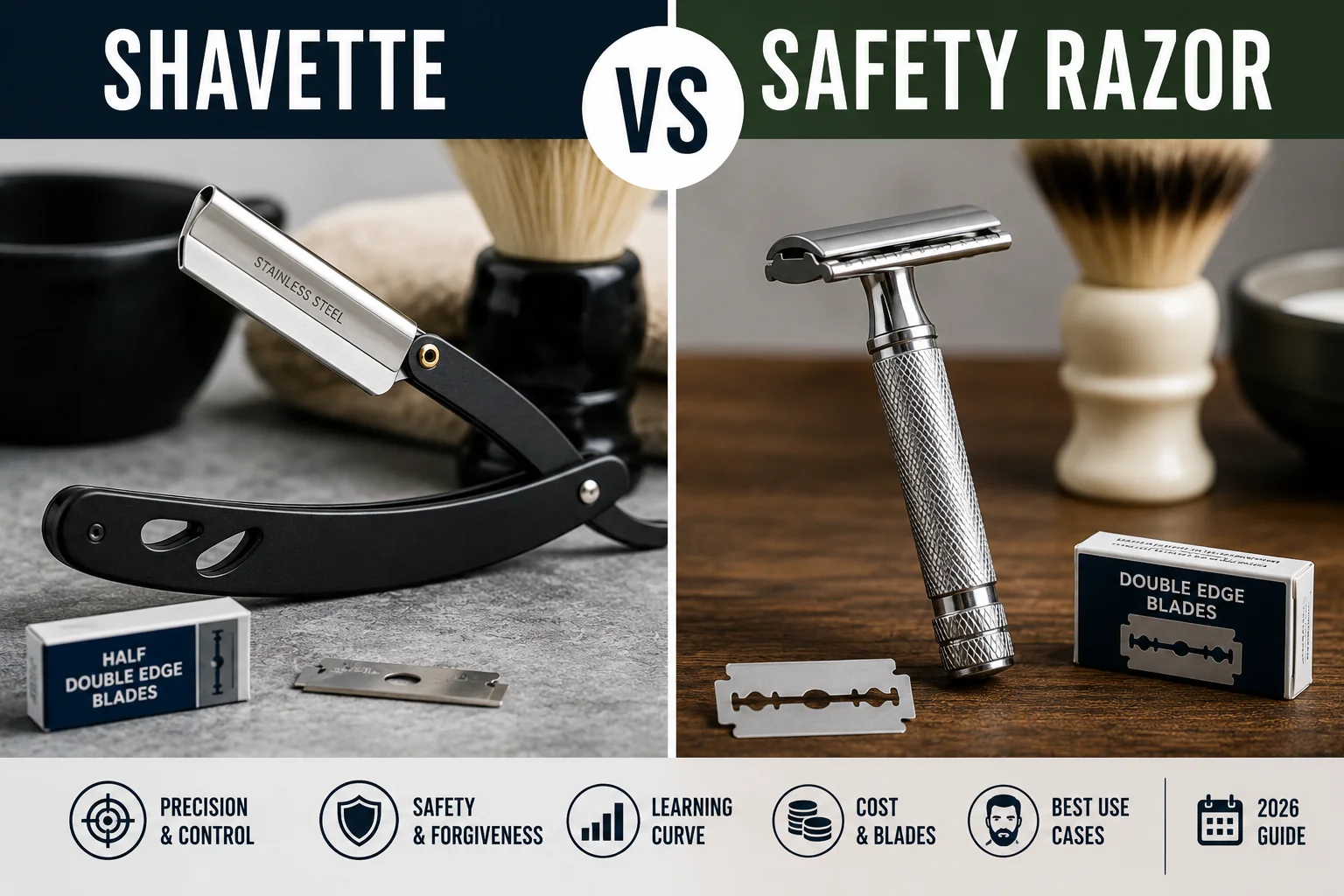


Choosing between a shavette and a safety razor can be confusing, especially if you are new to traditional wet shaving. Both provide a more traditional shaving experience than modern cartridge systems, both use replaceable blades in many designs, and both can produce an extremely close shave. However, they work very differently. The biggest difference is blade exposure: a safety razor has a protective head or safety bar that limits how much of the blade contacts your skin, while a shavette leaves much more of the cutting edge exposed. This makes the shavette more precise but also less forgiving. Current 2026 shaving guides continue to emphasize this difference when comparing the two tools.
What Is a Shavette?
A shavette is a disposable-blade razor designed to resemble a traditional straight razor. It normally has a folding handle and a blade holder instead of a permanently attached blade. Depending on the model, it may accept a half double-edge blade, a single-edge blade, or another disposable blade format. Unlike a traditional straight razor, a shavette does not require honing or stropping. When the blade becomes dull, it can simply be replaced. This makes it attractive to people who like the technique and precision of straight-razor shaving but do not want the maintenance associated with a permanent blade.
The exposed blade is the main reason shavettes are popular with barbers and experienced wet shavers. The flat head provides a clear view of the cutting edge, which can be particularly useful when defining sideburns, mustaches, cheek lines, and necklines. A shavette can therefore be an excellent detailing tool even for someone who prefers a safety razor for most of the face.
What Is a Safety Razor?
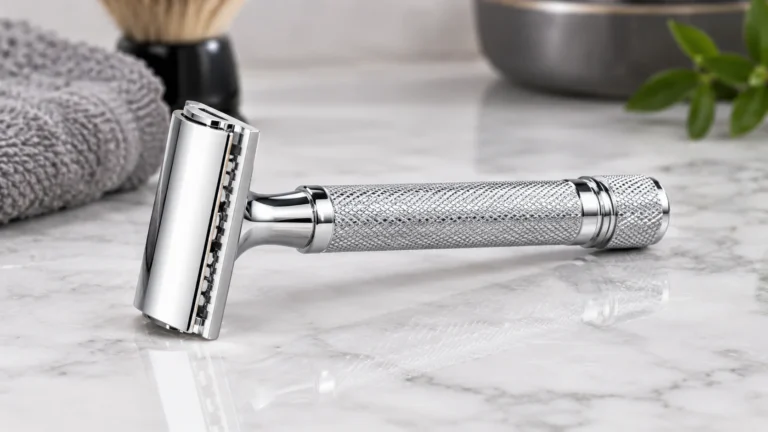
A safety razor is a traditional razor that places a protective structure between the blade edge and the skin. The classic double-edge safety razor uses a thin blade with two cutting edges, while the razor head controls the blade exposure and angle. This design reduces the amount of cutting edge directly exposed to the skin compared with a shavette.
The protective head is what makes a safety razor comparatively forgiving. Beginners still need to learn the correct angle and avoid excessive pressure, but the razor design provides more guidance than an exposed-blade shavette. For someone moving away from cartridge razors and entering traditional wet shaving for the first time, a safety razor is generally the easier starting point.


Shavette vs Safety Razor: Main Differences
| Feature | Shavette | Safety Razor |
|---|---|---|
| Blade | Usually disposable half-DE, SE or specialty blade | Usually replaceable DE blade |
| Blade exposure | High/exposed | Controlled by razor head |
| Learning curve | Steep | Easier |
| Precision | Excellent | Very good |
| Full-face shaving | Possible but requires skill | Excellent for everyday use |
| Beard detailing | Excellent | Good |
| Maintenance | Low | Low |
| Blade sharpening | Not required | Not required |
| Blade replacement | Very easy | Very easy |
| Forgiveness | Low | Higher |
| Beginner friendly | Usually no | Yes |
| Barber-style experience | Excellent | Moderate |
| Best use | Detailing and experienced shaving | Everyday shaving |
The comparison shows that neither razor is universally better. Instead, they are designed around different priorities. A safety razor prioritizes controlled blade exposure and repeatable everyday shaving, while a shavette prioritizes direct blade control and precision.
Shavette: Pros and Cons
| Pros | Cons |
|---|---|
| Excellent precision for beard lines | Steeper learning curve |
| Very good for sideburns and necklines | Higher chance of cuts if technique is poor |
| Disposable blades eliminate honing | Requires careful angle control |
| No stropping required | Less forgiving than a safety razor |
| Easy to keep hygienic with fresh blades | Can take longer for beginners |
| Gives a classic barber-style experience | May cause irritation with excessive pressure |
| Lightweight and often compact | Full-face shaving requires practice |
The biggest advantage of a shavette is control. You can see the blade edge clearly and position it exactly where you want it. This is especially useful around the mustache, sideburns and beard borders. The trade-off is that there is very little built-in forgiveness. Modern 2026 comparisons continue to describe shavettes as tools that reward technique but punish poor angle and pressure control.
Safety Razor: Pros and Cons
| Pros | Cons |
|---|---|
| Easier for beginners | Less precise for detailed edging |
| Protective head provides more forgiveness | Requires learning the correct angle |
| Excellent for regular full-face shaving | Some models can feel aggressive |
| Replaceable inexpensive blades | Less direct blade visibility |
| Good balance of closeness and control | Can still cause cuts with poor technique |
| Many blade and razor options | Requires regular cleaning |
| Suitable for long-term wet shaving | Less barber-like than a shavette |
A safety razor’s biggest advantage is consistency. Once you learn the correct angle and pressure, it can become a reliable everyday shaving tool. You can also change blades without sharpening or maintaining an exposed permanent blade. For many users, this combination of traditional shaving and relatively simple maintenance makes the safety razor the better daily driver.
Which Gives a Closer Shave?
It is tempting to say that the shavette automatically produces a closer shave, but the reality is more complicated. Both tools can cut facial hair very close when used correctly. The major difference is the amount of control and exposure available to the user.
A skilled shavette user can achieve excellent closeness because the exposed blade makes it easier to control exactly where the edge travels. However, the same exposure means that poor technique can lead to cuts, irritation, or an uncomfortable shave. A safety razor can also deliver an extremely close shave when the correct blade, angle, preparation, and technique are used.
Which Is Better for Beginners?
For most beginners, the safety razor is the better choice. Its protective head gives new users more room to learn. You still need to avoid pressing hard and should allow the blade to do the cutting, but the design is more forgiving than an exposed shavette.
A beginner interested in shavettes does not necessarily need to avoid them forever. A sensible progression is to become comfortable with traditional shaving preparation and safety-razor technique first, then move to a shavette for detailing. Starting with simple areas such as sideburns or beard edges can help build confidence before attempting a full-face shavette shave. Current 2026 guides similarly recommend gaining experience before moving to exposed-blade shaving.
Which Is Better for Barbers?
For professional barber work, a shavette has a major advantage: the disposable blade can be replaced between clients. This makes the tool practical for hygienic professional services while retaining the precision of a straight-razor-style instrument. Shavettes are widely used for edging, necklines and detailed facial work where a highly visible blade is useful.
A safety razor is generally more appropriate for personal daily shaving than professional beard detailing. Its guarded head is excellent for removing hair from larger areas but is less convenient when creating extremely sharp beard boundaries.


Shavette vs Safety Razor: Which Should You Buy?
Choose a safety razor if you are new to traditional shaving, want a reliable everyday razor, prefer a more forgiving design, or mainly shave your entire face.
Choose a shavette if you already have good shaving technique, want maximum control, enjoy the barber-style experience, or need a precise tool for beard lines and detailing.
There is also no rule saying you must choose only one. Many experienced wet shavers use a safety razor for the cheeks, neck and other larger areas and keep a shavette for precision work. This combination can provide both efficiency and detailed control.
Final Verdict
The shavette vs safety razor debate in 2026 is less about which razor is universally better and more about choosing the right tool for the job. A shavette offers excellent precision, direct blade control and a traditional barber feel, but it demands patience and technique. A safety razor offers a more controlled blade exposure, easier learning curve and excellent performance for everyday shaving.
For beginners, the safety razor is the clear starting point. For experienced wet shavers, a shavette can be an excellent addition to the shaving kit. And for barbers or anyone who regularly shapes beard lines, the exposed blade of a shavette can provide an important precision advantage.
In simple terms: choose the safety razor for everyday shaving and choose the shavette when precision and blade control are your top priorities.

Henry Collins
- I research many different shavers, trimmers, and other grooming products.
- Share ideas on which product is best for which skin type or hair type.
- Help you pick the right grooming product and save your time and money.


The Conversation
Your voice matters. Discussions are moderated for civility.